




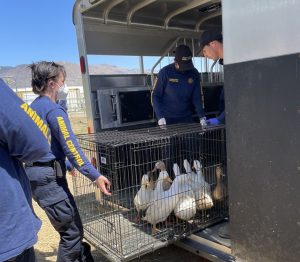
The Riverside County Department of Animal Services (RCDAS) has taken possession of 480 ducks surrendered by a property owner in unincorporated Riverside County.
Animal Control Officers inspected the property leading up to the large-scale operation as part of an ongoing investigation. The relinquishment is the result of overcrowding at the property.
According to RCDAS, the property owner, identified as Howard Berkowitz of The Duck Sanctuary in Anza, is currently cooperating with RCDAS to coordinate placement of the animals. As part of the investigation into the welfare of additional waterfowl, the department is investigating the scale of overcrowding on the property.
RCDAS said its main priority is the safe transport and intake of the ducks, and that it’s working quickly to find placement rescues, adopters, and organizations willing to assist this week.”
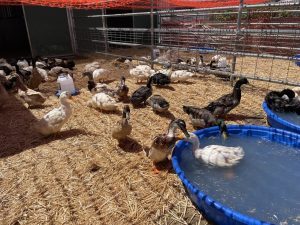
RCDAS said it has been aware of Berkowitz’s intent to maintain an animal sanctuary for the birds, but recent investigations revealed the need for action to remove the animals from the property due to improper husbandry.
Concerns about The Duck Sanctuary run by Berkowitz prompted advocates to create a Facebook page, The Duck Sanctuary Exposed, in November 2024 to raise awareness and concerns over the care of the ducks.
Prior to the operation, RCDAS coordinated with the California Department of Food and Agriculture to test a sample of the animals for zoonotic infectious diseases, which were all negative results. Limited assessments show the animals did not receive adequate caretaking.
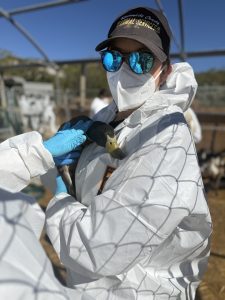
“Overcrowding can contribute to stress and decreased immune function,” RCDAS Chief Veterinarian Dr. Itzel Vizcarra said. “Inadequate nutrition, particularly vitamin A deficiency, can impair the lining of the digestive tract, predisposing birds to inflammation and secondary illness.”
These conditions are commonly seen in birds kept in overcrowded or undersourced environments. The primary recommendation for recovery and prevention is improved caretaking, including appropriate stocking density, sanitation practices, and a balanced, nutritionally complete diet.
The department is actively coordinating care and intake for the animals at the San Jacinto Valley Animal Campus, where they will be available for adoption on Wednesday, April 15. Rescue organizations and individuals interested in adopting can contact the department by emailing [email protected]. The animals are available on a first-come, first-served basis, and all adoption fees are waived.
Appropriate carriers are required for transport from the shelter and must be supplied by the adopters or rescues. Adopters must check with their city or local jurisdiction regarding ordinance restrictions on the number of waterfowl permitted per household, as regulations vary by location.
For additional information, visit https://rcdas.org.